
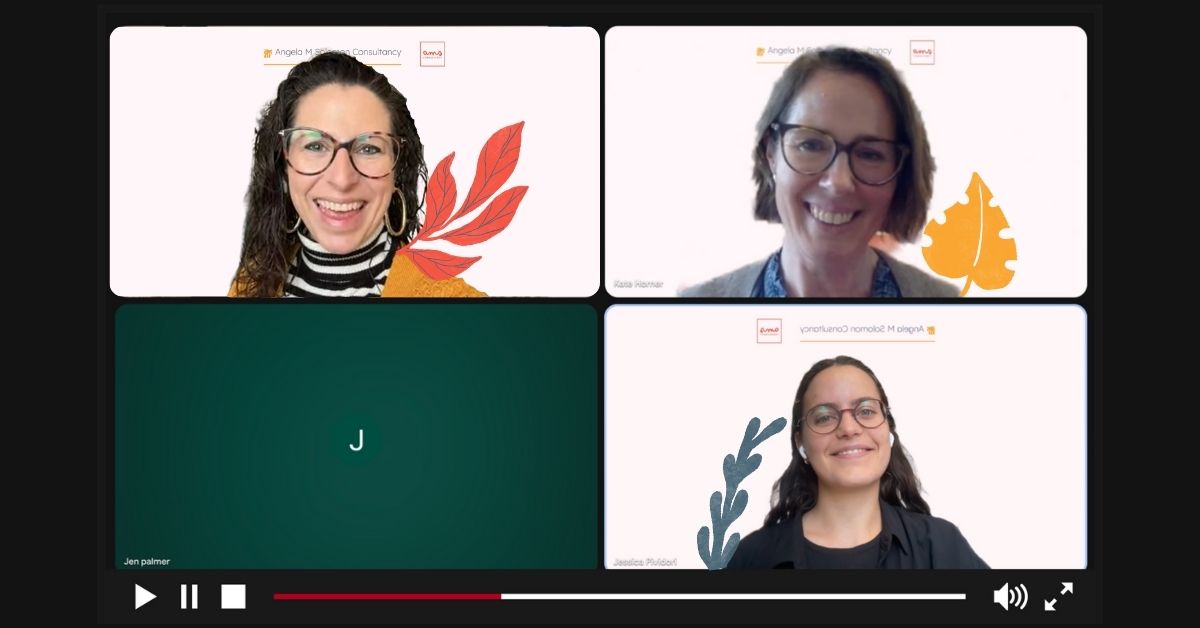
Angela Solomon interviews senior AMS associate Kate Horner about how she approaches communications and marketing strategy, especially in contexts where there is uncertainty or competing priorities.
Angela Solomon: You often work with purpose-driven businesses and organisations that are just getting started, or shifting direction. What are the communications challenges you see in those early stages?
Kate Horner: I often find that people have a lot of ideas about what they could offer, and those ideas don’t always neatly fit together. Or they’re trying to do two things at once, and they’re not sure which one to prioritise. So the first challenge is streamlining and structuring your offer in a way that doesn’t feel like you’re closing the door on something — but does give you clarity and focus.
Angela: And once that’s done?
Kate: Then we start thinking about how you talk about what you do. Not just through your social media or marketing efforts, but also when you meet someone at a conference or on a call. That’s where a communications strategy is useful. It helps you define the difference between relationship-building and selling, and gives you clarity to structure your messaging so it lands well with different types of people. It’s especially hepful if you’re feeling unsure about your audience or your style.
Angela: You’ve said before that marketing is marketing, whether you’re trying to attract donors or paying clients. Can you say more about that?
Kate: In my view, the way you engage people doesn’t change that much, regardless of whether you want them to donate or buy a product or service. It’s still about building trust, helping people understand what you do, and building a relationship over time. So even if you’ve only worked in the nonprofit sector before, that’s relevant experience. There are definitely different elements (like how you structure an offer, or write a sales page), but the fundamentals are the same.
Angela: For clients who are just starting to engage with communications and marketing, especially people who don’t have much time or budget. Where do you tell them to focus?
Kate: Your website is key. Even if it’s a single page, it should clearly explain what you do and who it’s for. LinkedIn can be really valuable too: it’s a great way to keep in touch with your network without having to “do marketing” all the time. If you have a bit more capacity, a simple newsletter is another good way to stay visible and build relationships.
Angela: And if someone is open to doing a bit more?
Kate: Then we might build a fuller communications strategy, something that gives you clear messaging and goals, so you can stay consistent across your channels and measure what’s working. That usually includes a simple elevator pitch, a few core messages tailored to your audiences, and some KPIs across the funnel. Things like website traffic, newsletter signups and engagement rates on content, so we can track whether you’re getting more visible, and whether that’s converting into opportunities.
Angela: I know you’re a big fan of data. How do you make that work for smaller organisations?
Kate: I think a lot of people assume data is only for big marketing teams. But actually, it’s what helps you avoid wasting time. We set KPIs, we test different messages and formats, and then we refine the strategy based on what the data tells us. That’s how you stay lean and keep your focus on what’s actually working.
Angela: And what about businesses that are trying to grow into a new market, especially if they’re still not sure whether it will work?
Kate: I’m a big believer in “test and learn.” If you have a new offer or a new audience, the best thing you can do is test it quickly, cheaply, and in a way that gives you real feedback. Can you get a couple of clients or paying customers? Can you get some visibility and a bit of momentum? If you can, great. If not, that tells you something too and perhaps your offer isn’t right for your current audience. But you have to commit enough to really give it a fair shot, to show it in the best possible light and see what happens.
Angela: Any advice for people who feel a bit allergic to “selling”?
Kate: You don’t have to be pushy or salesy. In fact, please don’t be. A good communications strategy helps you shift your mindset away from “convincing” people. It’s more about helping people understand what you do, and making it easier for them to say yes, if it’s a fit.
Angela: Thank you, Kate.
In case you’re starting something new, shifting direction, or trying to bring more focus to an offer that still feels like it’s evolving, Kate’s advice is a helpful reminder that clarity doesn’t have to mean limitation. It simply makes it easier for the right people to understand what you do, trust you, and say yes when the time is right.
If you’d like support shaping your messaging, strategy, or next steps (especially when time, budget, or priorities feel stretched), explore how we can help here! and if you’d like to start a conversation, get in touch or reach out on LinkedIn.