
Simple steps for nonprofit teams to finally resolve those endless conversations about the value of communications.
We’re often asked to prove the value of communications based on a simple equation: activity equals income. The reality – and the reason why the question keeps coming up – is a bit more complicated.
Most donor journeys are multi-touch and non-linear. Take this example:
- Someone hears about you through a partner or event
- They visit your website later
- They read newsletters for a few weeks
- They check LinkedIn or media coverage
- They ask peers if you are credible
- Then they get in touch
By the time funding comes in, communications have already shaped several steps. Last-click reporting does not capture that work. So if you measure the wrong metric, communication looks less valuable than it really is.
What communications really does: build readiness
A more useful way to describe communications value is readiness.
Comms builds the conditions that make funding, partnerships and media coverage more likely. When someone lands on your website, scans your newsletter or checks your LinkedIn, they should quickly see the next step you want them to take.
NGOs remain among the more trusted institutions globally (according to the 2025 Edelman Trust Barometer), but trust is fragile and varies by region. In that context, communications is one of the main ways organisations turn baseline trust into active confidence.
Donor preferences support the same point. In Nonprofit Tech for Good’s 2025 survey of online donors, 33 percent said email is most likely to inspire a donation, 29 percent said social media and 17 percent said a nonprofit’s website. These are communications channels. They may not often convert on their own, but together they shape how a donor decides.
The takeaway is practical: communication is not always about conversion – it’s about making conversion possible. We shape the environment.
As online search changes, visibility is not only rankings and clicks
The environment communications teams operate in is changing quickly, and some assumptions about digital performance are now out of date.
Cloudflare reported in 2025 that AI crawlers refer to relatively little web traffic back to original sources. In their dataset, OpenAI’s crawler generated roughly 1,091 crawls per visitor, and Anthropic’s ratio was higher. And Google’s new AI Overviews (that appear at the top of your search) are associated with a 58 percent drop in clickthrough rate for top-ranking pages.
For nonprofit communications, that has two implications. First, visibility is no longer only about rankings and clicks. And second, third party credibility signals such as media mentions, backlinks and thematic authority matter more than they used to.
User behaviour is fragmenting too. M+R’s 2025 benchmarks show that 53 percent of nonprofit website traffic comes from mobile, while 55 percent of donations and 70 percent of revenue still come from desktop. Discovery and conversion are happening in different places.
Communication is the connective layer between the different locations someone might “meet” your brand. So our work is now more complex but equally important.
Sure, but how do I measure the value of comms?
Most teams don’t need a perfect model that traces the audience’s behaviours in minute detail. Much more realistic is a reporting approach that can be done with limited time and resources, but is customised and robust enough for strategy and budget decisions.
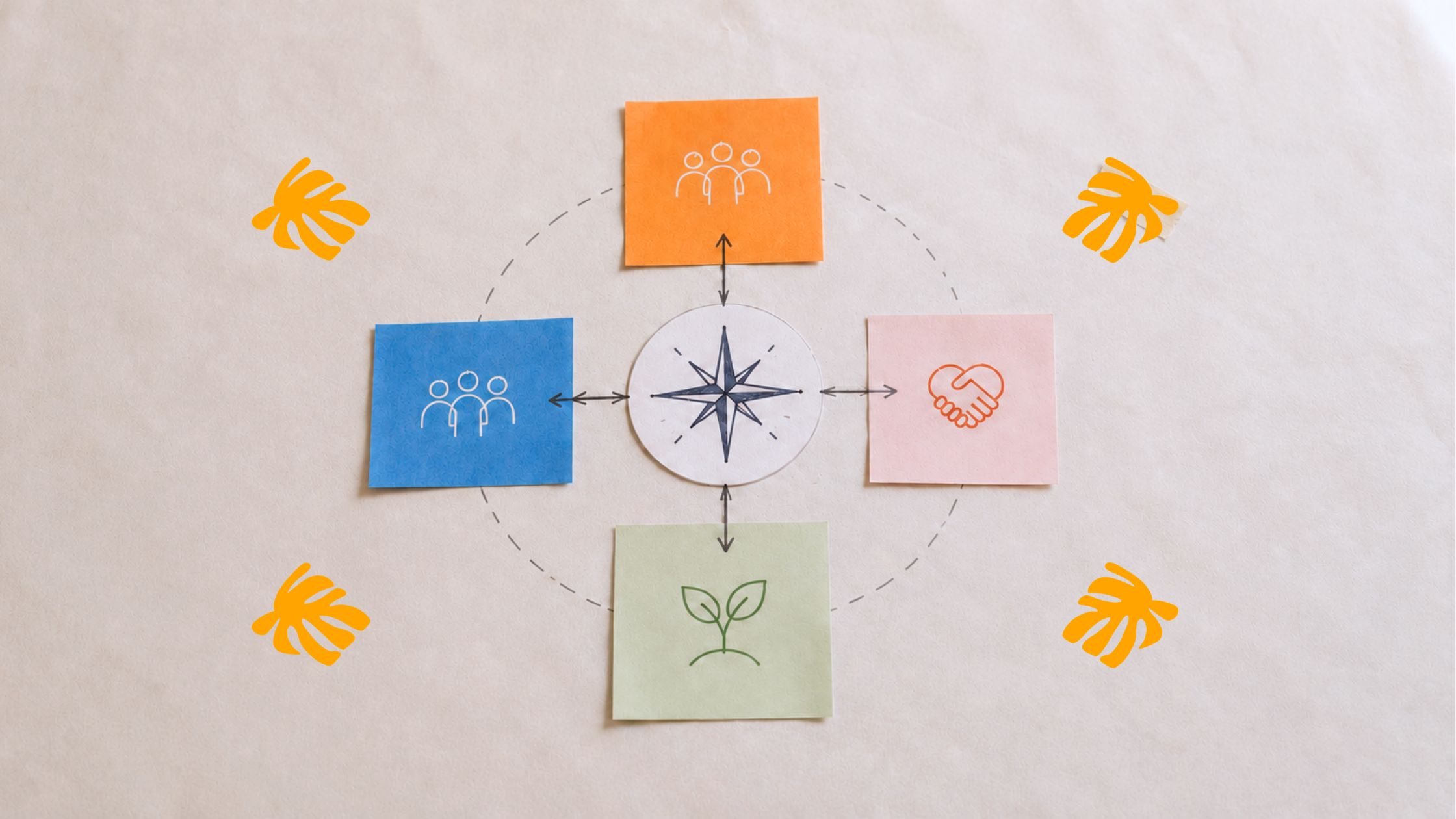
We have found it useful to track four areas.
1. Trust and credibility
- Media mentions and backlinks
- Speaking invitations
- Partner outreach
- Short stakeholder feedback you can quote internally
2. Discoverability
- Traffic to priority pages
- Branded and thematic search visibility
- Newsletter signups
- Presence in search and AI-generated responses
3. Engagement quality
- Email click-through rates
- Time spent on key pages
- Event registrations
- Replies, questions and direct interactions
(M+R reports that nonprofits raised an average of $2.63 in revenue per email subscriber in 2024. That shows why sustained engagement matters – and is a useful stat for benchmarking your own email list’s performance.)
4. Conversion readiness
- Donor enquiries
- Warm(er) first conversations
- CRM notes on how supporters found you – or a custom survey of donors, when capacity allows
- Donor retention
Blackbaud and GivingTuesday found that 65 percent of GivingTuesday donors gave again in 2025, compared to 52 percent of all donors. That gap is a clear argument for stewardship and follow-up – if you only focus on acquisition you are missing out.
Monitoring these four areas, an organisation can stop trying to “prove comms caused donation X”, and instead start showing cumulative progress that makes fundraising outcomes more likely – and not just for individual donors but for grants as well.
Next step
A quick and light(ish) measurement plan for a small team could include:
- 2-3 “trust” signals from the list above (or choose your own)
- 2-3 “discoverability” signals
- 2-3 “engagement quality” signals
- 2-3 “readiness” signals
Track them monthly for a quarter. Then you’ll have the beginning of a trendline that you can use for strategy, planning and budgeting.
–
AMS is an international communications agency for purpose-driven organisations. We build communications strategies and reporting that show real progress, without oversimplifying. If you would like support or to explore our services, please get in touch.