We don’t need to be in the same room to work together. So when is gathering worth the time, money, CO2, and effort?
Covid settled one question for many of us: we don’t need to be in the same room to work together.
I could not be more grateful for that change in mindset. Through the Covid years I was having babies. Working remotely was the only way I could manage all the kid logistics alongside working hours. That, and I’d unexpectedly moved from Beirut to Amsterdam, and was now 3,000 miles from my networks and projects.
So remote working allowed me to continue a career during the pandemic and during early years parenting. And building on how it was for me as an individual, we’ve leaned into that model to create opportunities here for the communicators working with us at AMS.
Remote work has allowed us to unlock an inspiring global talent pool, and profile diverse and underrepresented voices through our work. We can easily collaborate across countries and time zones. It’s crappy internet, not the emotional distance, that occasionally disrupts us. There’s nothing we can’t develop or decide online together and we are so fluent with the tools, we sometimes don’t even feel like we’re continents apart.
(Side note: I recently tried out MetaProf, a cool technology for meeting online in a virtual 3D environment. I liked the experience – it was a bit like gaming, and a bit like meeting. Definitely more fun than Zoom. In five years, perhaps we will all be meeting like this.)
I have, I confess, increasingly been wondering what the penalties now are for remote workers, when many people are back in the office or have hybrid work arrangements. And I’ve been feeling the need to physically visit and connect with more of our projects.
So perhaps it’s time to move on from whether in-person or remote work is better. The answer there is different for different people, jobs, organisations and life stages. A question I’m most interested in today is:
What makes it worth gathering?
Gathering people is expensive. It takes time and has an environmental cost. It can involve trains, flights, hotels, visas, childcare and days away from other work. Even a two-hour workshop represents a large collective investment once you multiply those hours by everyone in the room.
So gathering is not to be taken lightly.
Exchanging information is a poor reason to gather
As Kaz Nejatian, CEO of Opendoor, recently said: “Meetings exist because people could not get the information they needed to make decisions before the meeting.” Information exchange is something we can do without gathering. Status updates. Briefings, decision papers, approvals. Meetings where ten people listen while two people talk. Bringing people together doesn’t automatically make any of these things better.
Instead, we think gathering becomes valuable when something needs to happen between people, not simply be communicated to them.
Five reasons to gather
Here are five things that can be worth gathering for.
1. Creating something people need to own together
A strategy can be written by one person. So can a set of organisational values, a narrative or a plan.
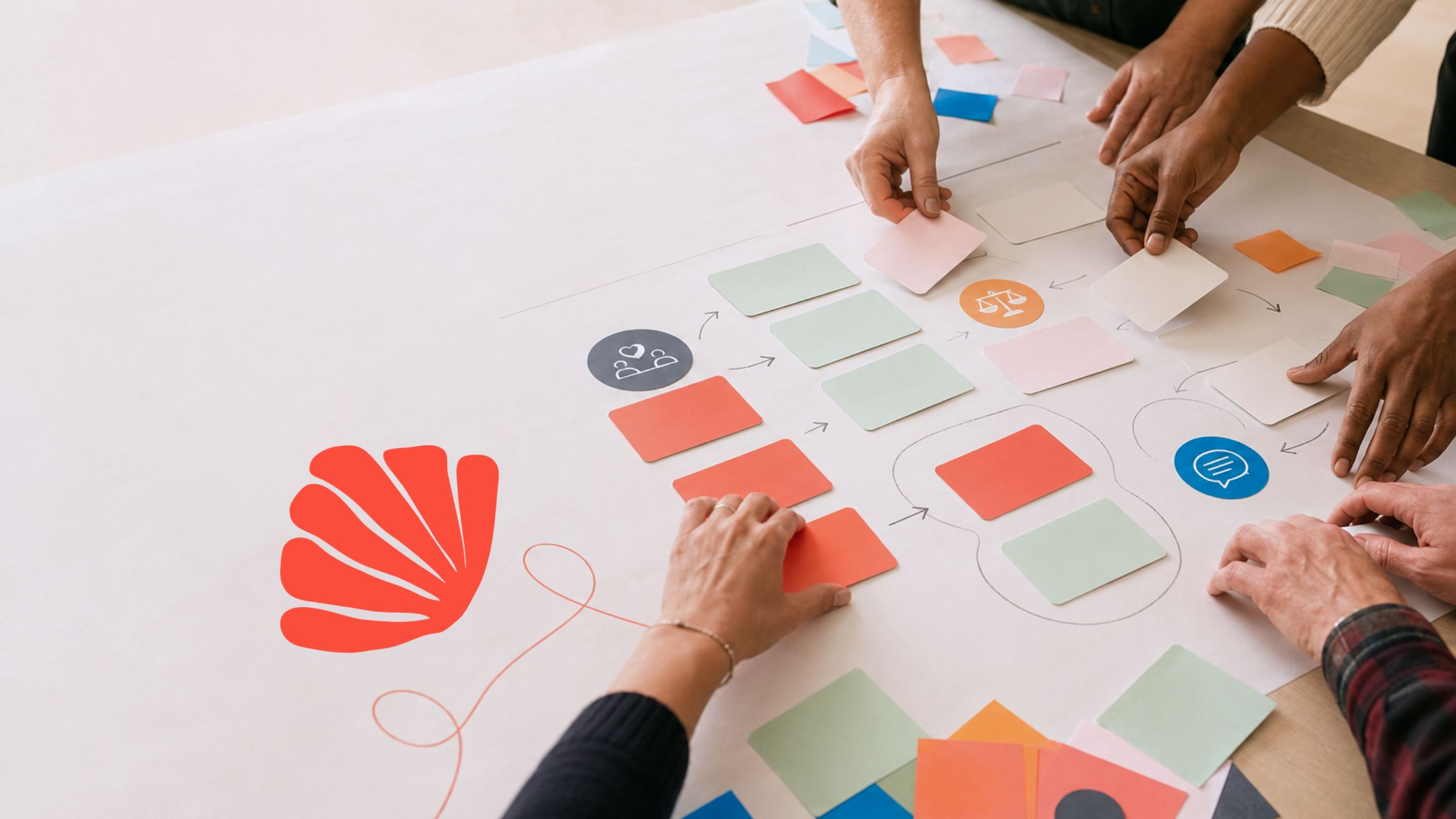
But is that the best way? Writing something and creating ownership of it aren’t the same thing. Sometimes we need to wrestle with an idea together, as a group. We need to hear why a colleague sees it differently, challenge language, make compromises and recognise their own thinking in the result. The output may still be a document – but one with more meaning.
2. Hearing and being heard
Perspective is everything, in life and work. And bringing different perspectives together is a driver of the nonprofit world, something we are really good at. At times of change, difficult decisions, or services where lived experience or different perspectives are crucial, we really need to facilitate conditions for people to listen properly, surface disagreement and understand what sits behind different positions.
Sometimes listening isn’t an activity within the gathering: listening is the reason to gather. There is a difference between having airtime and feeling heard. And a good gathering delivers the latter.
3. Building relationships
We are enthusiastic remote workers at AMS. Our team works across countries and continents, often without meeting each other in person. But remote working has also helped clarify what is harder to replicate online. And deep, trusting relationships can be one of those things.
Sometimes a 30-minute calendar invitation just isn’t the right tool. Time together can create room for the unplanned conversation, the difficult question and the human detail that doesn’t make it onto the agenda. And it is fun to discover each other’s favourite coffee orders, and how tall we actually are.
4. Making complex decisions
Purpose-driven organisations often work on really difficult problems. Not enough money, too many things we need to prioritise, incomplete information and changing contexts, all set against a background of urgent need. Making complex decisions, in ambiguity, is about more than information exchange. People need to think together – and that can be worth a room.
5. Creating momentum
There should be a difference between the day before a gathering, and the day after it. A decision has been made. A relationship has changed. A new idea exists. People have agreed what happens next. Something previously stuck has moved. If everyone leaves with nothing more than a notebook full of interesting points, it’s worth asking whether they needed to gather at all. But creating momentum, a watershed moment – that is a great goal for a gathering.
The room is only the ‘middle’
We tend to talk about a gathering as the hours people spend together. But the most effective ones have a much longer life.
- Before: Why are we gathering? What should participants think about or prepare? What do we need to understand about who’s coming?
- During: What can these particular people accomplish together that they couldn’t accomplish separately?
- After: What happens because we gathered?
That final question is easily neglected. The crinkled post-it notes get binned. The flipcharts come down. Everyone returns to their inbox…
A good gathering needs a bridge back into everyday work.
… and then there’s UNGA
During the UN General Assembly each September, thousands of people working on some of the world’s biggest challenges converge on New York. Organisations host meetings, launches, receptions, panels, roundtables and side events. Many are competing for the attention of the same people.
It is nuts. And it isn’t necessarily representative. At the 2024 General Debate, less than 10% of speakers were women. Look back over the first 78 sessions and just 620 of 11,190 General Debate addresses, or 5.5%, were delivered by women.
And being in New York doesn’t necessarily mean being in the room. The UN Youth Office itself acknowledges that access to UN Headquarters during UNGA is limited, one reason it promotes a wider programme of gatherings in New York and around the world.
So alongside asking who is gathering, we should probably ask: who isn’t?
AMS has supported communications around several UNGAs, and there is a paradox we see repeatedly:
When large numbers gather, attention is fragmented.
People are in the room, but on their phones. Good luck getting everyone to focus on your keynote, unless you’re a pop star or a celebrity leader. Having the people you want to reach in the same city doesn’t mean they’ll notice you on a podium. Grabbing a coffee or chat in the margins can be much more valuable.
Proximity isn’t attention. And presence isn’t a communications strategy.
Why this gathering? Why these people? Why now? And what can happen here that couldn’t happen another way? Sometimes the answer will justify bringing 200 people together. Sometimes it might justify bringing eight. And sometimes the best gathering is the one you decide not to organise.
We’ve raised the bar for gathering
It’s not that virtual is better than physical, or vice versa. It’s just that we now have choices.
We don’t need to gather simply because that’s how work gets done. That gives us the opportunity to be much more deliberate about when we do it. So before booking the venue, sending the invitations or getting on the plane, we think there is one question worth asking:
What will exist afterwards, that didn’t exist before?
If there’s a compelling answer, that’s a gathering worth having.
—
AMS is a global communications agency that helps NGOs, foundations and social enterprises use messaging to harness their influence and achieve their mission.
We combine senior strategic counsel, world-class delivery and a purpose-driven, human-centred approach to strengthen teams and build sustainable in-house capability. Whether organisations need support with visibility, fundraising, influence or communications capacity, we work as an embedded extension of their team to help them achieve their goals.
Contact us here to discuss how we can help your organisation.