This compliance document can also be an inspiring tool year-round for donors and partners.
For many NGOs, the annual report requires a long process. Once it’s finished, in line with regulatory requirements, they drop it onto the website and boom, we’re done.
But strong organisations use the report as a strategic asset, to explain value, show stewardship and help funders and partners make decisions. Yes, regulatory frameworks are clear that the report is about accountability and transparency. For example, in the UK, the trustees’ annual report is designed to show how funds were used and what was achieved.
But in practice, that same compliance report also shapes donor confidence, signals organisational maturity and captures learning for staff and boards. The report’s dual role creates an opportunity. When you handle it well, the annual report becomes more than a retrospective document: it also becomes a tool people can use to engage in support of your mission.
What leading NGOs do differently
Two interesting examples, charity: water and Transparency International, show what “usable transparency” can look like.
They do not treat the annual report as a standalone PDF. They publish a set of linked materials that let readers move from narrative to verification, without friction. That usually includes:
- A clear narrative report that explains priorities, progress and trade-offs
- Audited financial statements and statutory filings
- Governance and accountability disclosures
- Supporting programme data, methods or evaluation notes
For example, charity: water publishes its annual report alongside audited accounts, Form 990 and external ratings on a single financials page. Donors can read the story and then check the numbers in the same place.
The result is not just “better reporting”. It is a clearer reason to trust the organisation, because the evidence is easy to find.
From document to funding and partner decisions
When annual reports are designed around real audiences, they support fundraising and partnerships more directly. From supporting nonprofits through the process ourselves, we’ve seen see three pillars make the biggest difference:
- Clarity (not volume): strong reports prioritise the few messages that matter most, instead of listing every twist and turn of their year.
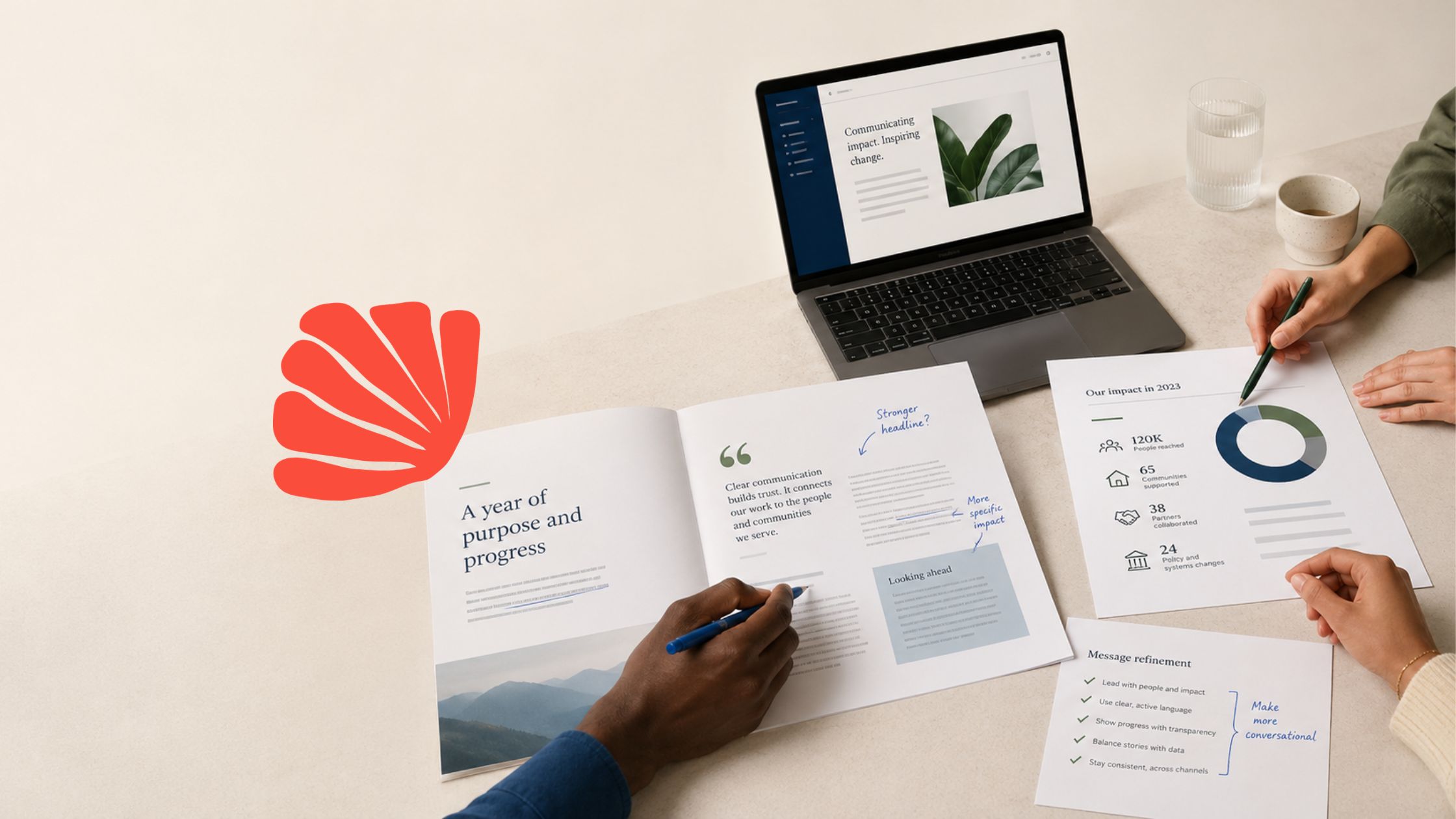
- Evidence: they link outcomes and stories to data, financials and methods. Funders and supporters can assess risk and credibility based on the data while also being engaged by the impact.
- Easy navigation: digital-first publishing helps readers find what they need quickly, whether that is impact, governance or finance.
Sector guidance often makes the same point: annual reports should demonstrate accountability and support resource mobilisation.
When you get the basics right, the report becomes more persuasive, because readers can verify what you say – while also reflecting the values and culture of the organisation.
See the report as part of a ‘transparency stack’
The most effective approach is to treat the annual report as the narrative hub of a broader transparency stack. That stack usually includes:
- The annual report as the narrative hub
- Audited accounts and statutory filings
- Governance and board information
- Programme data or impact dashboards
- Links to standards, disclosures or third-party verification where relevant
Each element answers a different stakeholder question. Together, they let people test claims, understand trade-offs and assess credibility.
Make the shift in practice
Moving the annual report from obligation to asset is really just a mindset shift in the team. It starts with intent, and a production plan.
We typically advise organisations to:
- Define the primary audiences and the questions they need answered
- Integrate narrative, data and financials, not just at the end
- Design for accessibility and usability (without losing visual appeal)
- Ensure every major claim can be traced to evidence, accounts or a disclosed method within the report itself.
Final thought
An annual report people can trust is one they can use. Donors use it to assess credibility. Partners use it to understand fit. Leadership teams use it to learn and plan.
AMS helps purpose-driven organisations with their Annual Reports and other governance communications that build a positive brand and engage supporters and donors throughout the year. We can help you map stakeholder questions, tighten the narrative and connect claims to evidence and disclosures, in line with best practice and governance requirements. If you want an annual report that is clear, usable and inspiring, get in touch to explore how we can help.